
What Is the Most Durable Countertop Material for a Kitchen?
When you choose a countertop material for your kitchen remodel, durability is one of the most important factors to consider. Your kitchen countertops absorb daily impact from knives, hot pans, spills and constant use. The material you select determines how much maintenance your kitchen will need and how long it will hold up before chips, stains or scratches start to show.
Several countertop materials offer strong durability, but they achieve it in different ways and come with different tradeoffs. Quartz, granite, Corian and quartzite each resist daily wear effectively, though the right choice for your kitchen depends on your cooking habits, maintenance preferences and budget.
Quartz
Quartz countertops are engineered from crushed natural quartz combined with resin binders, creating a surface that is significantly harder than many natural stone options. This manufacturing process makes quartz non-porous, so it resists scratches and won’t absorb liquids that cause staining. Because the material doesn’t develop the small surface pores found in natural stone, bacteria and food residue have nowhere to settle, which makes quartz one of the most hygienic countertop options available.
Beyond durability, quartz offers a level of consistency that natural stone can’t match. Since it’s manufactured, you can expect uniform color and pattern across the entire slab. Quartz also requires no sealing, so your maintenance routine stays simple: regular cleaning with soap and water is typically all you need.
The main tradeoff with quartz is heat sensitivity. While it resists scratches and stains exceptionally well, direct contact with hot pots or pans can cause discoloration or damage to the resin binders over time, so you’ll want to use trivets or hot pads. Some people also prefer the natural variation of stone, since quartz’s manufactured uniformity can appear slightly less organic compared to granite or quartzite.
Granite
Granite is a natural stone formed under intense heat and pressure, which gives it exceptional hardness and density. This natural formation process makes granite countertops highly resistant to scratches from knives and daily kitchen use. Granite also withstands heat far better than many other kitchen countertop materials, so you can set a hot pan directly on the surface without worrying about damage.
Because granite is a natural stone material, every slab has unique veining and color patterns that give your kitchen a one-of-a-kind look. This natural variation is a major draw for homeowners who want a countertop that feels distinct rather than mass-produced. Granite’s durability also translates into a long lifespan, and a properly maintained granite countertop adds to your home’s resale value.
The tradeoff with granite is that it requires periodic sealing to maintain its stain resistance. Granite is naturally porous, so an unsealed or poorly maintained surface can absorb liquids like wine or oil, leading to staining over time.
Corian
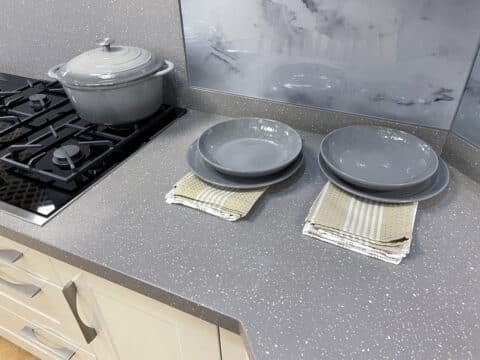 Corian is a solid surface material made from a blend of natural minerals and acrylic polymers, creating a completely non-porous surface. Because Corian has no pores for liquid to penetrate, you get strong resistance to staining from common kitchen spills such as coffee, wine and tomato sauce. The material’s seamless installation also eliminates the grout lines or seams found in tile or stone countertops, so you don’t have to worry about bacteria or grime collecting in hard-to-reach crevices.
Minor surface damage is easily repairable on Corian countertops, further improving its durability. If you notice a small scratch or burn mark, you can have the area sanded and buffed to restore the surface. You’ll also find Corian available in a wide range of colors and patterns, including options that mimic the look of natural stone.
The tradeoff with Corian is that it’s more heat sensitive than quartz, granite, or quartzite, so you’ll need to use trivets to protect the surface from hot cookware. Corian can also scratch more easily than denser materials, though its repairable nature ensures those scratches don’t have to be permanent.
Quartzite
Quartzite is a natural stone formed when sandstone undergoes intense heat and pressure, resulting in a material that’s even harder than granite. This density makes quartzite highly resistant to scratches, etching and daily wear. Quartzite also handles heat exceptionally well, so you don’t have to worry about damaging the surface from hot cookware.
Quartzite’s natural beauty closely resembles marble, giving you the soft, organic veining commonly associated with high-end stone. Unlike marble, however, quartzite’s hardness makes it far more practical for everyday kitchen use. Its combination of durability and elegant appearance makes it a strong choice if you want a countertop that looks luxurious while standing up to daily activity.
The tradeoff with quartzite is that it requires periodic sealing to protect against staining, similar to granite. Quartzite slabs also tend to come at a higher price point, and you may find a more limited selection of colors and patterns compared to quartz or granite.
Choosing the Right Material for Your Kitchen
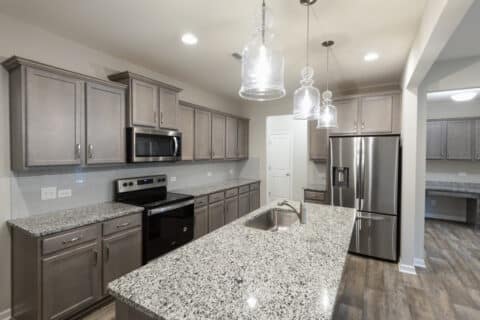 With several durable countertop options available, your decision comes down to matching the material to your specific priorities. If low maintenance is your top concern, quartz gives you durability without sealing or regular upkeep. If you want the unique character of natural stone and don’t mind periodic sealing, granite or quartzite will give you a one-of-a-kind surface that holds up for decades.
Your cooking habits also play a role in this decision. If you frequently set hot pots and pans directly on your countertop, granite or quartzite will tolerate that heat better than quartz or Corian. If you’re drawn to a seamless look or want the option to repair minor surface damage down the road, Corian offers advantages the other materials can’t match.
Budget and overall kitchen design will factor into your decision too. Each of these materials delivers strong, long-term durability, so you can move forward with confidence knowing your countertop will hold up to daily use no matter which one you choose. The right fit depends on how that durability aligns with your maintenance preferences, your cooking style and the look you want for your kitchen.
Sander & Sons Can Bring Your Vision to Life
If you’re considering a kitchen remodel project, Sander & Sons can bring your vision to life. We’ve been providing kitchen design and remodel services in the Denver area for 30 years, and our team has the experience to deliver the customized solutions that align with your specific goals.
At Sander & Sons, we offer a wide range of kitchen countertop materials that span a variety of styles and budget levels, ensuring we have an option that addresses your specific needs while providing tremendous value. During your initial in-house consultation, our team will listen carefully to understand your aesthetic vision and the goals of your kitchen remodel project. This process enables us to develop a customized plan that maximizes your space and delivers beautiful results that you’ll love for years to come.
Contact us today to schedule a consultation. Sander & Sons serves customers in Denver and the surrounding areas.
Frequently Asked Questions About Durable Kitchen Countertop Materials
Is quartz or granite more durable for kitchen countertops?
Quartz and granite are both highly durable, but they resist damage in different ways. Quartz is non-porous and resists scratches and stains without sealing. Granite offers superior heat resistance and natural hardness but requires periodic sealing to maintain its stain resistance.
Does quartzite scratch easily?
Quartzite is one of the hardest natural stone countertop materials available, making it highly resistant to scratches from knives and daily kitchen use. Its density rivals or exceeds granite, which makes it a strong option if scratch resistance is a top priority.
Is Corian as durable as quartz or granite?
Corian is durable in different ways than quartz or granite. While it can scratch more easily than these denser materials, its non-porous surface resists staining effectively. In addition, minor scratches or burns can be sanded and buffed out, a repair option quartz and granite don’t offer.
How long do durable countertop materials like quartz, granite, and quartzite last?
With proper care, quartz, granite, and quartzite countertops can last 25 years or longer. Granite and quartzite require periodic sealing to maintain their durability over time, while quartz’s non-porous surface keeps maintenance minimal throughout its lifespan.
Do durable countertop materials still require maintenance?
Yes, even highly durable countertop materials benefit from routine care. Granite and quartzite need periodic sealing to maintain stain resistance, while quartz and Corian require regular cleaning but no sealing. Following your material’s specific care recommendations will help preserve its durability long term.
Get Your Free Estimate
We would love to help you with your next project. Contact us to learn more.
Learn More